Published: Dec 15, 2025
Leading with balance in the age of AI
Artificial intelligence has entered a defining moment, reshaping markets, business models, and the expectations placed on leaders. As organisations across the region scale their AI ambitions, the challenge is no longer about whether to adopt AI, but how to do so with foresight, responsibility, and resilience.
Drawing on insights from the Australian Governance Summit, this article examines the forces driving AI’s rapid evolution and the dual responsibilities facing today’s leadership teams. It offers a pragmatic lens on what it really means to lead with balance in an era where technological acceleration and governance expectations are rising in tandem.
Key takeaways
- Artificial intelligence has entered a pivotal phase, shifting from isolated breakthroughs to broad, market-shaping impact across industries.
- Organisations must understand AI’s triple impact on innovation, operations, and governance to navigate disruption effectively.
- Balancing rapid AI adoption with strong digital resilience is essential to sustaining long-term competitiveness.
- Governance is not a constraint but an enabler for trusted and scalable AI deployment.
- APAC markets offer distinct lessons on how innovation, regulation, and resilience can be combined to strengthen national and enterprise-level strategies.
Understanding AI’s rapid shift from potential to impact
Artificial intelligence has moved beyond isolated breakthroughs to become a defining force in global competitiveness. Over the past two decades, its growth has accelerated through three distinct phases — from early experimentation to deep-learning-driven expansion to today’s generative AI era. This trajectory is reflected in the significant innovations that reshaped markets and the broader technology landscape (see Figure 1).
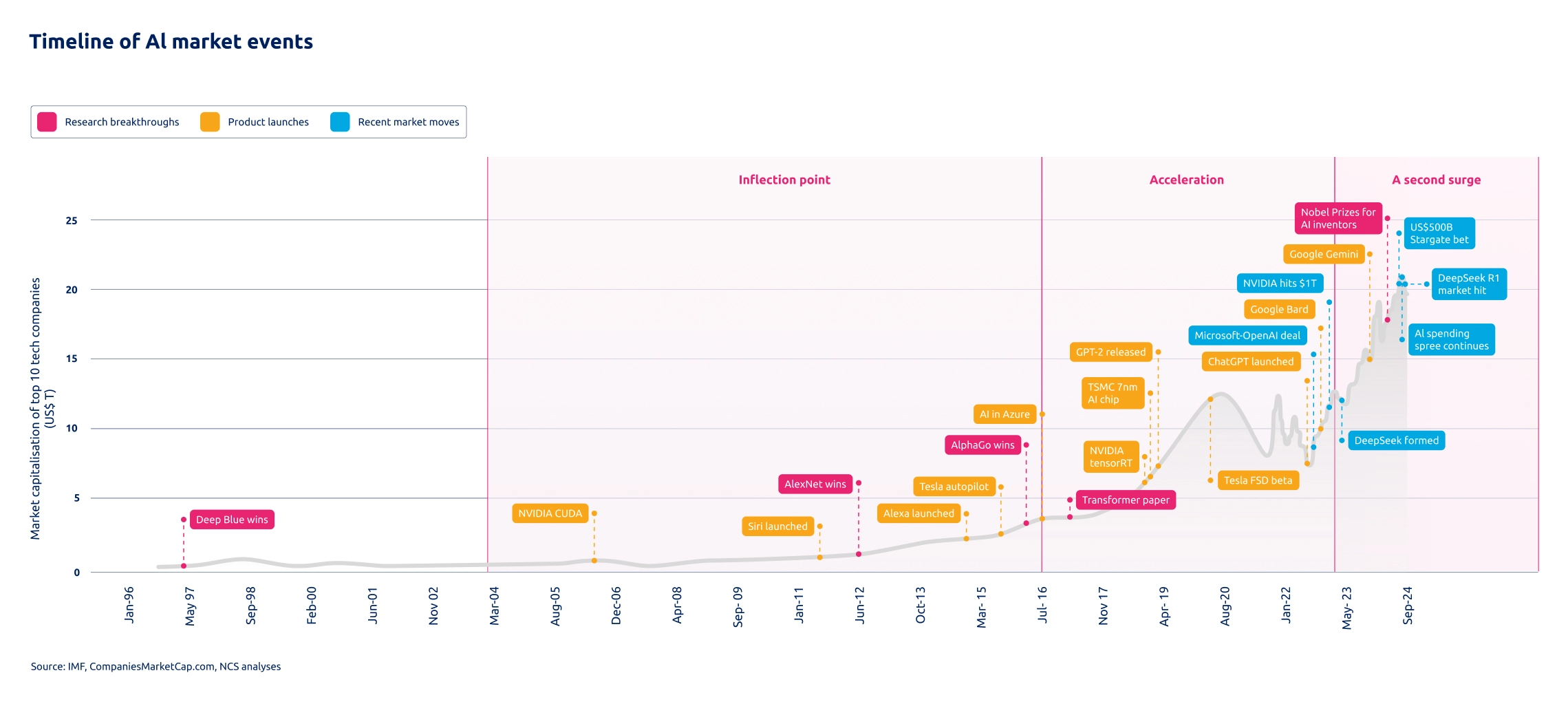
Figure 1: Major AI innovations that moved markets (market cap data of top 10 publicly-listed technology companies sourced from CompaniesMarketCap).
As organisations embed AI across customer engagement, product design, and strategic decision-making, investment has surged. Both the US and China are racing to build large-scale AI infrastructure, intensifying competition and setting the stage for the next wave of capability growth. This investment surge is reshaping competitive dynamics across global markets (see Figure 2).
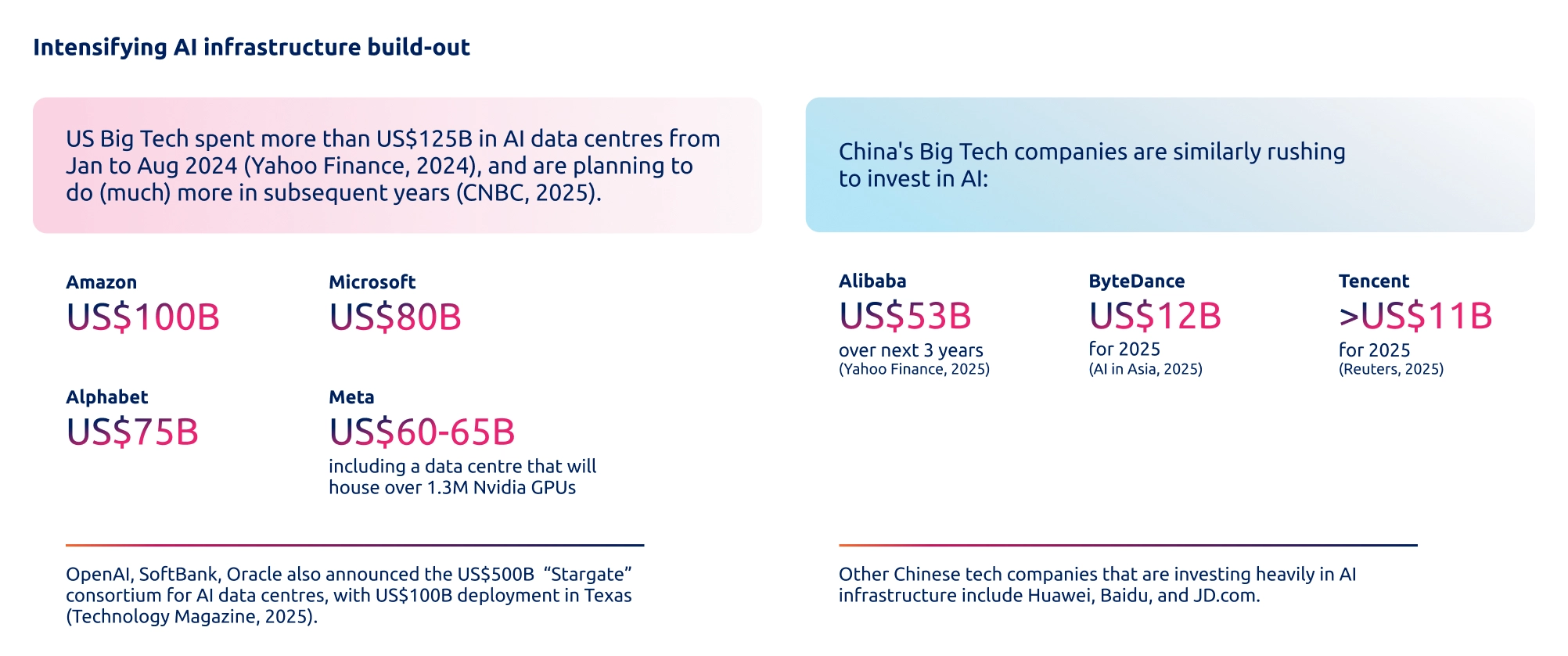
Figure 2: Recent announcements by large US and China tech companies show a rush to build AI data centres.
This rapid expansion, however, brings volatility. Markets shift quickly as AI-first challengers emerge, regulatory environments evolve, and internal workflows must adapt. In boardrooms, the moment calls for strategic clarity, understanding how AI reshapes value, operations, and risk.
AI’s triple impact on the enterprise
AI is no longer a specialised capability; it is a force multiplier reshaping how organisations innovate, operate, and govern.
1. AI as an innovation engine
AI accelerates discovery and creativity across sectors. In science and R&D, models simulate complex systems, generate new drugs and materials, and shorten development cycles. In creative industries, generative AI is redefining content production and personalisation.
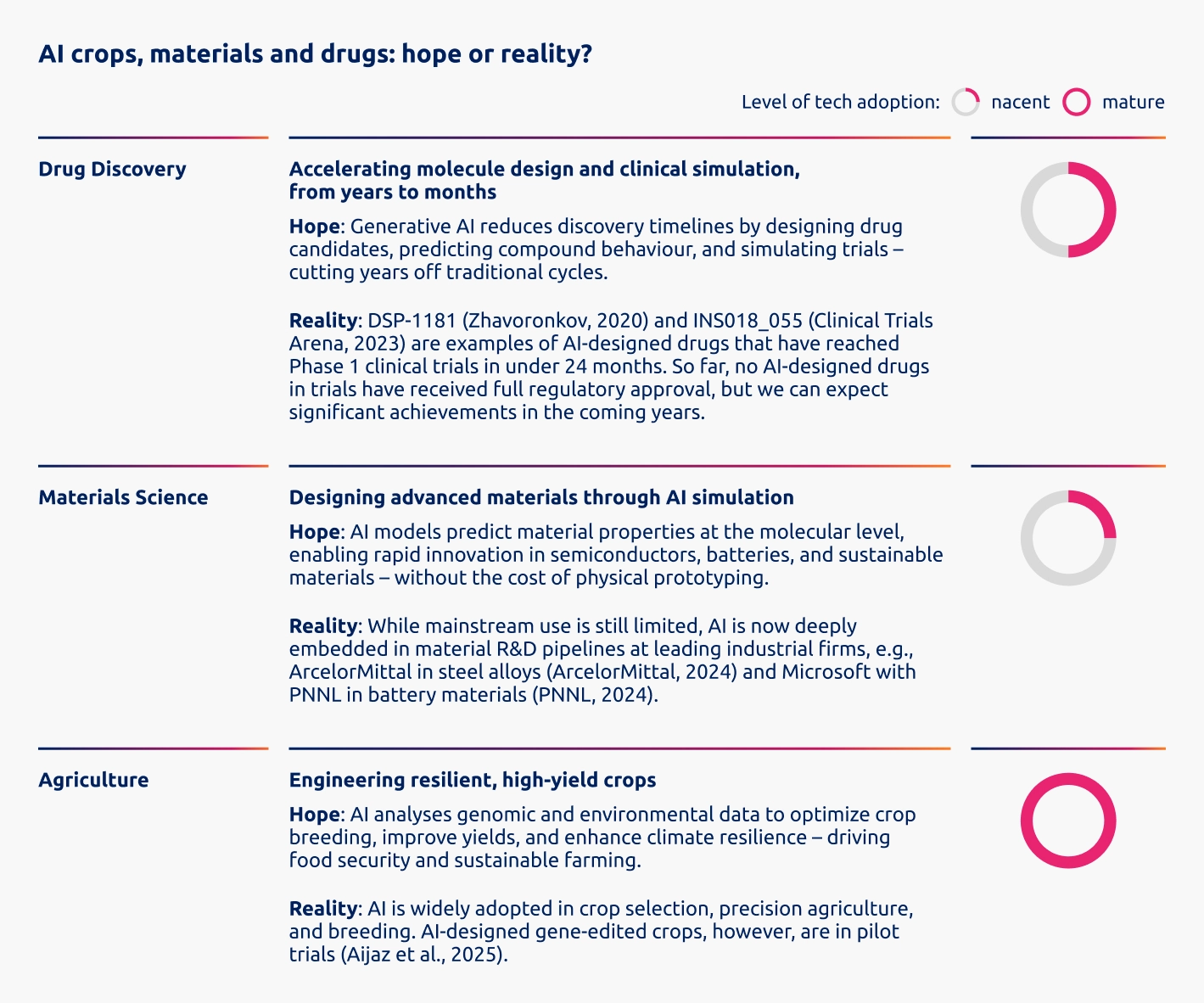
Figure 3: How AI is transforming the R&D for drugs, materials and crops: Drug discovery and materials science show strong R&D momentum while agriculture leads in deployment.
2. AI as an operational accelerator
Operational AI is shifting from automation to autonomy. Agentic systems optimise workflows, support real-time decision-making, and scale operations without continuous human input. Organisations are deploying AI to modernise call centres, enable predictive maintenance, and strengthen financial operations.
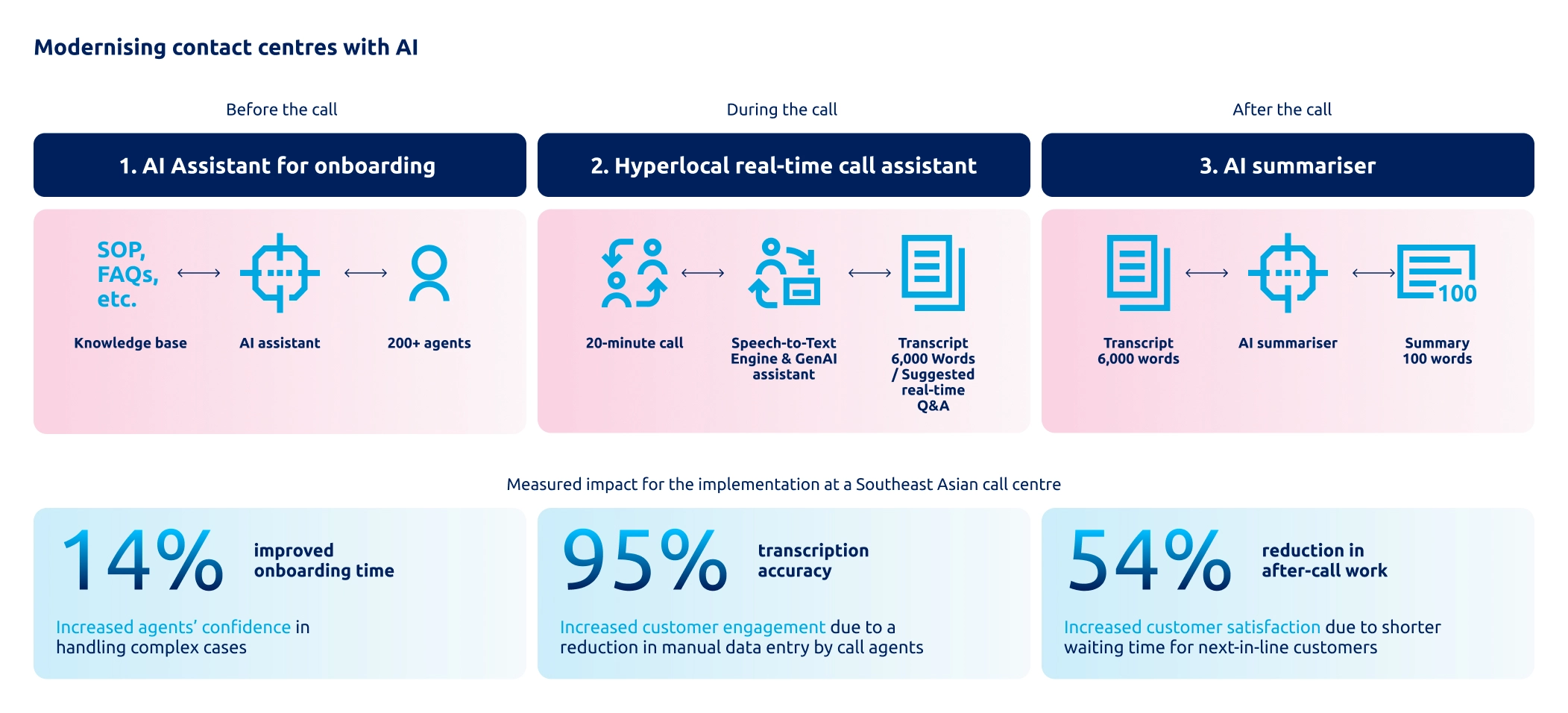
Figure 4: Modernising the customer service centre using AI on multiple fronts: onboarding and training of new agents, virtual assistance for the human agents during a call, and automating after-call work.
3. AI as a governance imperative
As AI systems become more autonomous, leaders must manage risks related to bias, transparency, privacy, and accountability. Regulatory frameworks across APAC are evolving quickly, prompting enterprises to embed governance principles early to sustain trust.
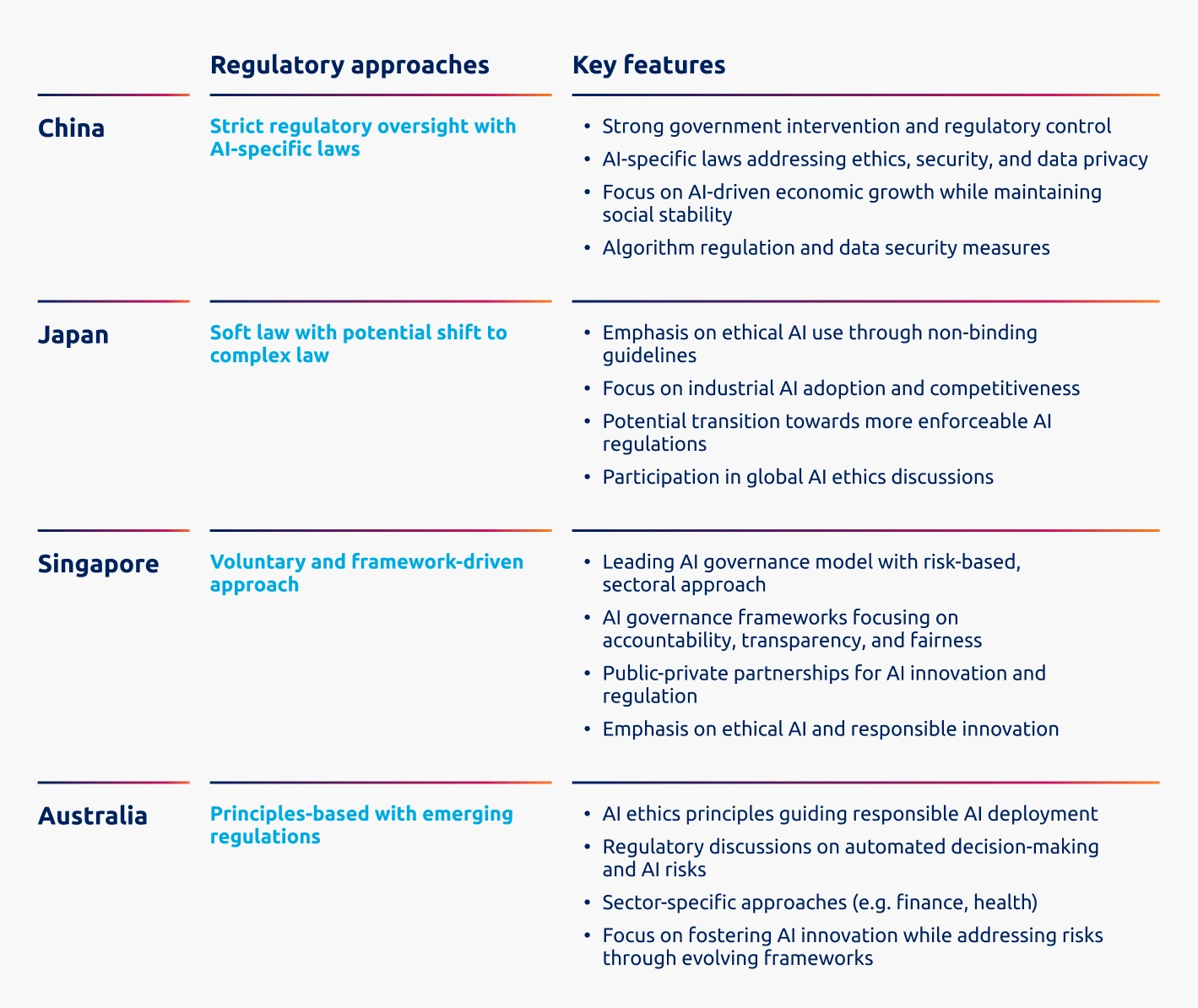
Figure 5: Comparison of the AI governance approaches of select APAC countries. (The White & Case AI Watch)
Balancing innovation, governance, and resilience
Leaders face two critical balancing acts that will shape their organisation’s trajectory.
Enterprise balancing act: Innovation vs. Governance
Responsible governance is a foundation, not a limitation, for scalable AI. Embedding ethics boards, transparency standards, and proactive regulator engagement allows organisations to innovate with confidence and maintain trust.
Technology balancing act: AI Adoption vs. Digital Resilience
Rapid adoption brings risk if not paired with strong digital resilience. Organisations fall into four archetypes:
- Game Changer: High AI, high resilience
- House of Cards: High AI, low resilience
- Missed Opportunity: Low AI, high resilience
- AI Dust: Low AI, low resilience
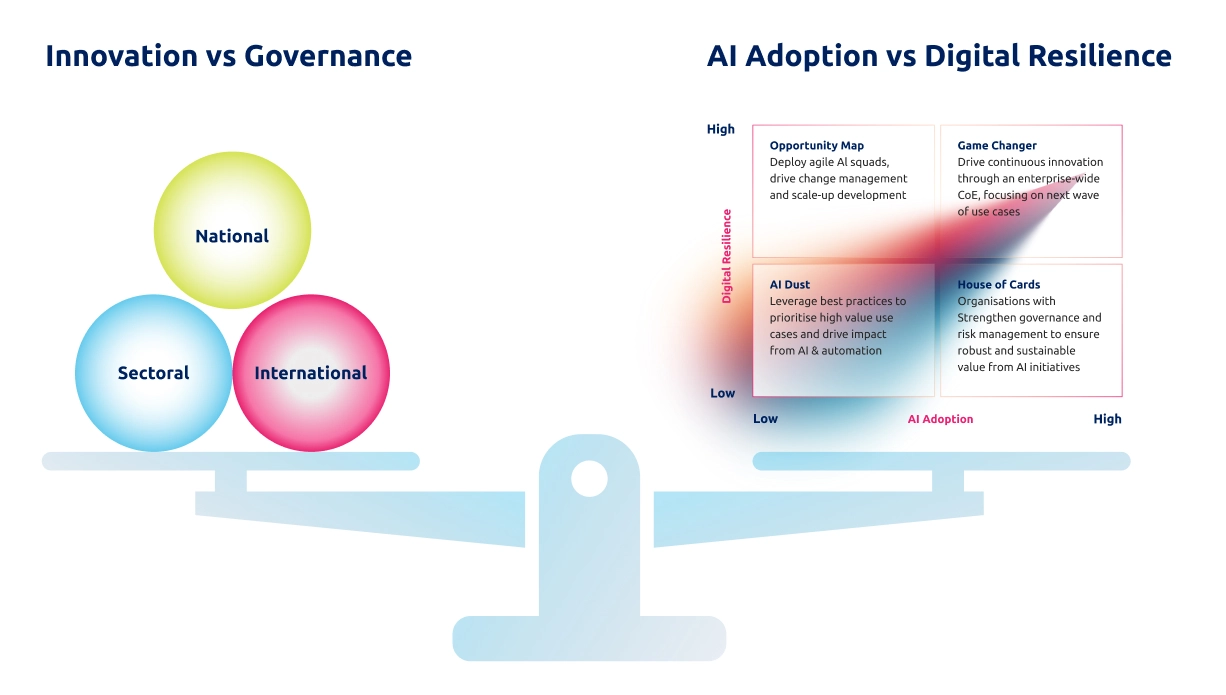
Figure 6: The two balancing acts that senior executive teams of organisations must manage in the era of AI.
APAC models for AI leadership
Across APAC, countries take distinct paths to AI leadership: Singapore balances rapid adoption with robust governance frameworks like the Model AI Governance Framework and AI Verify; Australia leads with principles-based regulation and targeted scaling in public services and finance; Japan demonstrates frontier innovation through its tech giants yet sees slower uptake among traditional sectors; and China advances AI at scale through significant national investment, even as its governance and trust models continue to evolve.
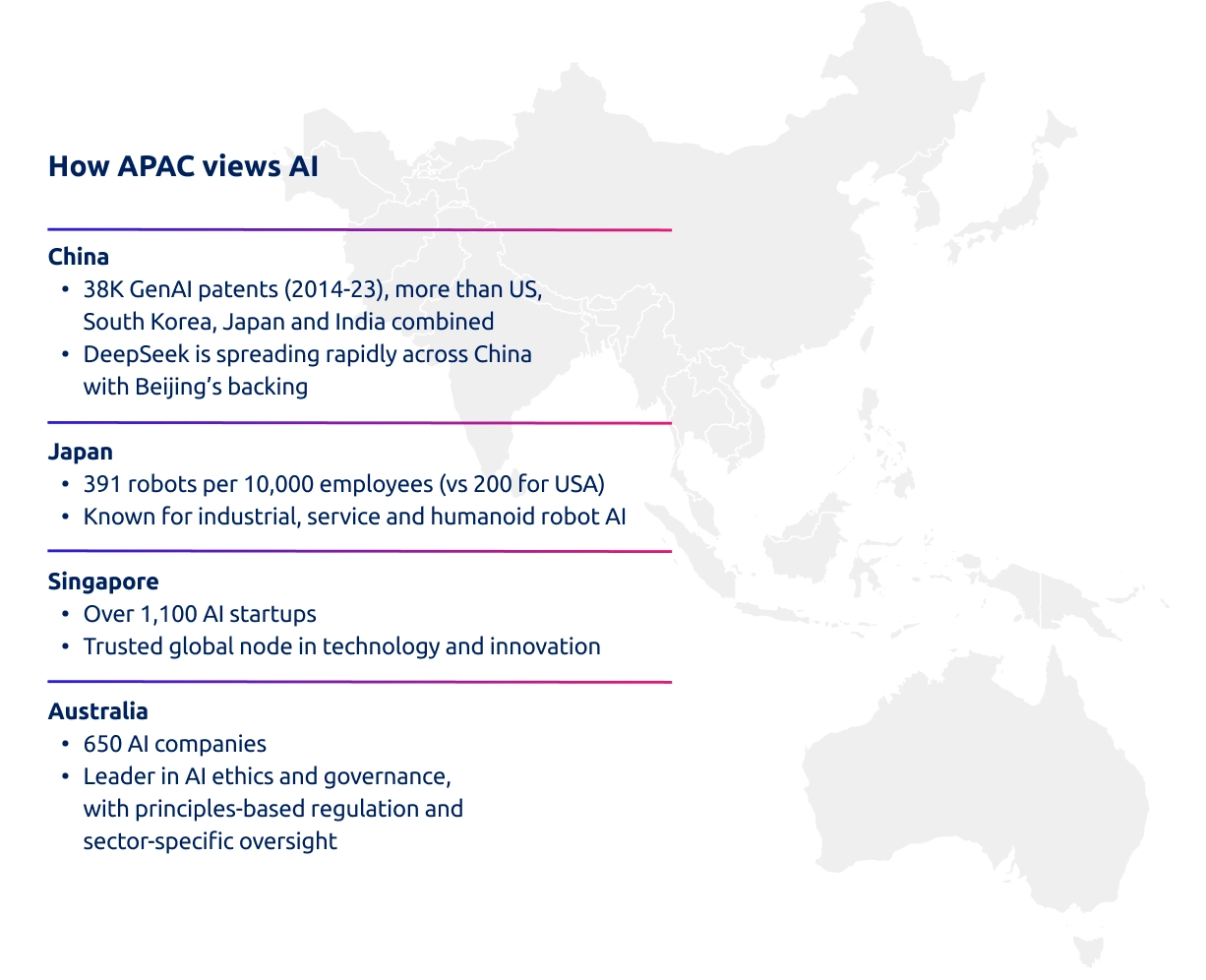
Figure 7: How APAC views AI.
Leading with balance
The organisations that succeed will be those that embed AI intentionally, strengthen digital resilience, and evolve governance in step with technological progress. This balanced approach enables enterprises to innovate at speed, maintain trust, and lead confidently in an environment shaped by continuous intelligence.
Taken together, these forces create a leadership landscape where balance becomes a strategic differentiator.
Balancing ambition with responsibility
Artificial intelligence is reshaping markets, operations, and governance at a pace that demands both ambition and discipline from leadership teams. Organisations that succeed will be those that approach AI with intentionality, embedding it into innovation and operations while strengthening digital resilience and aligning with evolving governance standards.
By combining deep technical expertise with a pragmatic, enterprise-wide view of risk, opportunity, and long-term readiness, NCS helps organisations strike this balance. Our teams work alongside clients to design trusted AI frameworks, accelerate adoption responsibly, and build the resilience needed to thrive in a landscape defined by continuous intelligence.
References
AI in Asia. (2025, January 30). ByteDance $12 billion AI investment (2025). https://aiinasia.com/bytedance-12-billion-ai-investment-2025/
Aijaz, N., Lan, H., Raza, T., Yaqub, M., Iqbal, R., & Pathan, M. S. (2025). Artificial intelligence in agriculture: Advancing crop productivity and sustainability. Journal of Agriculture and Food Research, 101762.
ArcelorMittal. (2024). Steel thoughts: Embracing the opportunity of AI. https://corporate-cm-prod.arcelormittal.com/smarter-future/steel-thoughts-embracing-the-opportunity-of-ai-1
Australian Institute of Company Directors. (2025). Australian Governance Summit. https://www.aicd.com.au/events/australian-governance-summit.html
Clinical Trials Arena. (2023). Insilico Medicine advances AI-discovered INS018_055 to Phase II trials. https://www.clinicaltrialsarena.com/news/insilico-medicine-ins018055-ai/
CNBC. (2025, February 8). Tech megacaps to spend more than $300 billion in 2025 to win in AI. https://www.cnbc.com/2025/02/08/tech-megacaps-to-spend-more-than-300-billion-in-2025-to-win-in-ai.html
CompaniesMarketCap. (n.d.). Company market capitalizations by sector and country. Retrieved March 25, 2025, from https://companiesmarketcap.com/
Pacific Northwest National Laboratory. (2024, January 9). PNNL kicks off multi-year energy storage scientific discovery collaboration with Microsoft. https://www.pnnl.gov/news-media/pnnl-kicks-multi-year-energy-storage-scientific-discovery-collaboration-microsoft
Reuters. (2025, March 19). Tencent joins China’s AI spending race with 2025 capex boost. https://www.reuters.com/technology/tencent-joins-chinas-ai-spending-race-with-2025-capex-boost-2025-03-19/
Technology Magazine. (2025, January 24). How $500bn Stargate venture signals AI strategy shift. https://technologymagazine.com/articles/how-500bn-stargate-venture-signals-ai-strategy-shift
Yahoo Finance. (2025, February 24). Alibaba to spend $53 billion on AI. https://finance.yahoo.com/news/alibaba-spend-53-billion-ai-022846544.html
Yahoo Finance. (2025, December 31). Many billions Big Tech spent on AI. https://finance.yahoo.com/news/many-billions-big-tech-spent-171500839.html
White & Case. (n.d.). AI Watch: Global regulatory tracker. https://www.whitecase.com/insight-our-thinking/ai-watch-global-regulatory-tracker
Zhavoronkov, A. (2020). Artificial intelligence for drug discovery, biomarker development, and generation of novel chemistry. Molecular Pharmaceutics, 17(4), 1576–1584. https://pmc.ncbi.nlm.nih.gov/articles/PMC7194950/