


A practical framework for sustainable business transformation, strengthened by Value Realisation Office (VRO)
The challenge is no longer whether AI works. The challenge is ensuring AI delivers meaningful, measurable and sustainable business impact.
From AI ambition to enterprise value
This first paper introduces the AI Value Realisation Framework, a practical model that enables organisations to move from experimentation to enterprise-scale transformation by aligning AI investments with business strategy, process excellence, organisational capabilities, trusted enterprise context, and continuous value measurement.
At NCS, we believe organisations achieve the greatest value when AI is embedded into business processes excellence rather than implemented as standalone technology.
This paper presents a practical framework that helps organisations move from experimentation to sustainable AI-enabled transformation.
The enterprise AI challenge
Many organisations have made significant investments in AI capabilities. However, common challenges continue to emerge:
- AI initiatives disconnected from strategic business priorities
- Inconsistent or undocumented business processes
- Poor data quality and fragmented information sources
- Difficulty demonstrating measurable business value
- Growing governance and regulatory requirements
- Limited organisational adoption
These challenges prevent organisations from moving beyond isolated proof-of-concept initiatives.
Enterprise AI should not simply automate work. It should improve how organisations make decisions, optimise operations and deliver better customer experiences.
Why process excellence matters
Every AI solution operates within a business process. If that process is inconsistent, highly manual or poorly governed, AI simply accelerates existing inefficiencies.
Process excellence provides the operational discipline required for successful AI adoption by helping organisations:
- Understand end-to-end customer journeys
- Identify operational bottlenecks
- Improve decision consistency
- Standardise business rules
- Establish measurable performance outcomes
Once this foundation exists, AI can amplify business performance rather than compensate for operational complexity.
A four-pillar framework for sustainable AI value realisation
The framework connects strategic intent to operational execution and creates a continuous feedback loop between business outcomes, process performance, AI behaviour and economic value.
In practice, NCS has applied this framework across large-scale transformation programs in both telecommunications and financial services, redesigning Data & AI governance, while embedding Software Development Lifecycle (SDLC) discipline into core data processes to improve consistency, governance, and traceability across the enterprise. Similarly, within a major superannuation administrator's Technology function, the framework supported process redesign initiatives that enhanced operational reliability, streamlined delivery, and accelerated value realisation.
NCS Value.ai Framework: from strategy to sustainable value realisation
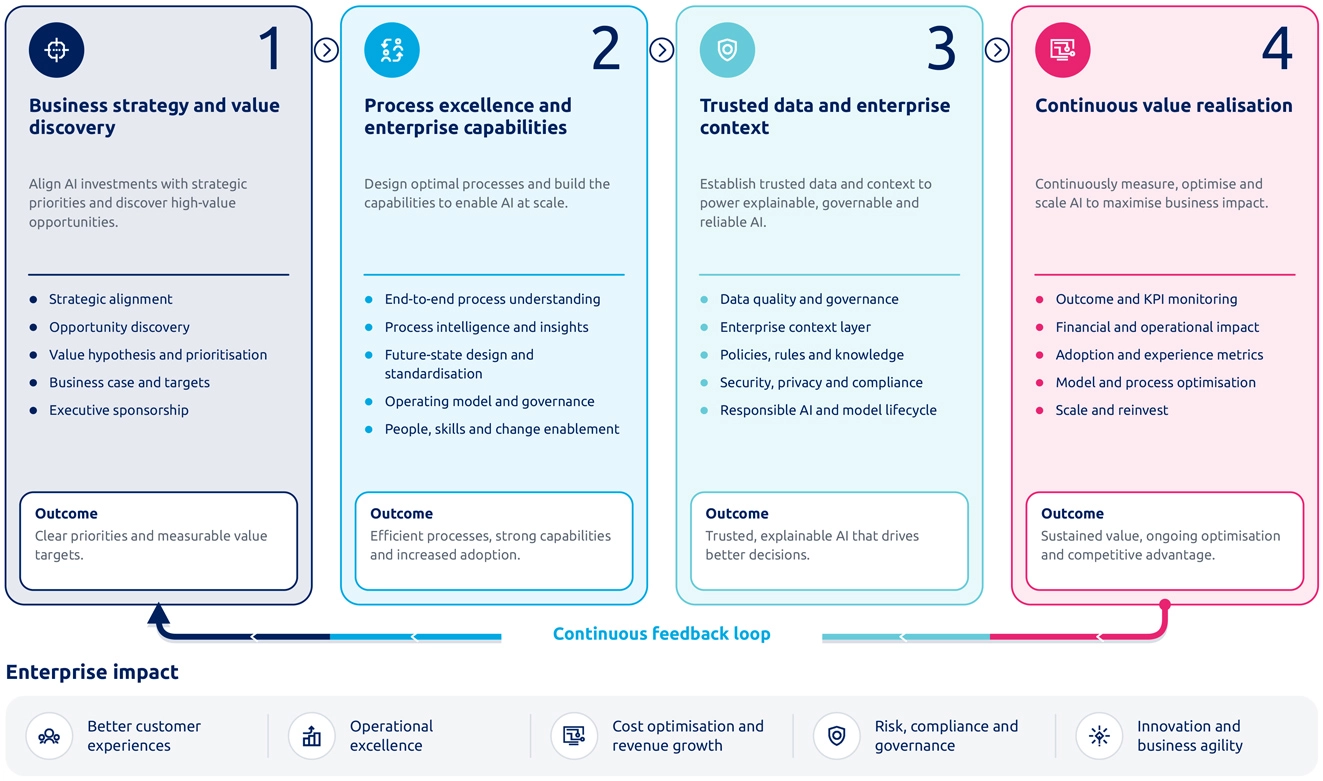
Figure 1. NCS Value.ai Framework: from strategy to sustainable value realisation
1. Business strategy & value discovery
Ensure AI investments are directly linked to strategic priorities: Revenue growth, Customer experience, Risk reduction, Productivity and Innovation.
By aligning AI programs with enterprise objectives, organisations establish a clear line of sight between investment decisions and business outcomes, ensuring resources are directed toward initiatives that deliver the greatest impact. This alignment not only strengthens executive sponsorship and organisational adoption but also provides a framework for measuring success through tangible value targets. Ultimately, organisations that link AI to strategic priorities are better positioned to scale initiatives, demonstrate return on investment, and transform AI from a technology experiment into a catalyst for sustainable business growth and competitive advantage.
Effective value discovery requires organisations to assess customer journeys, operational challenges, decision points, cost drivers, and strategic objectives to identify opportunities where AI can create measurable impact.
This phase establishes a clear connection between corporate strategy and AI investment decisions.
Leadership questions
- Which enterprise outcomes matter most, and where is value currently constrained?
- What evidence supports the opportunity and its expected impact?
- Who owns the business outcome, not only the technology delivery?
- What must be true for value to be realised and sustained?
The outcome
A prioritised AI investment portfolio with clear value hypotheses, executive accountability and measurable business targets.
2. Process excellence & intelligence & enterprise capabilities
AI delivers the greatest value when embedded into well-designed business capabilities. Process Excellence defines the future state. Process Intelligence provides evidence of how work actually flows today, using process mining, task mining, journey analytics and operational insight to identify friction, variation and transformation opportunities.
The target process should clarify where AI recommends, decides, generates or acts; where human judgement remains essential; how exceptions are managed; and which controls must be built into the flow. Scaling also requires an operating model that brings together product ownership, change, governance, AI literacy, workforce readiness and human-in-the-loop decision frameworks.
The organisations that successfully combine Process Excellence provides the discipline required to understand how value is created across the organisation.
It enables organisations to:
- Understand end-to-end customer journeys
- Identify bottlenecks and inefficiencies
- Standardise business processes
- Improve decision consistency
- Simplify operational complexity
- Design future-state operating models
Process Intelligence further enhances this understanding by providing data-driven visibility into how work actually flows through the organisation. Through process mining, task mining, journey analytics, and operational insights, organisations can identify high-value transformation opportunities and measure the impact of AI interventions.
Beyond process design, organisations must also establish the capabilities required to sustain AI adoption, including:
- Governance and operating models
- Workforce readiness and skills
- Change management
- Product ownership
- AI literacy
- Human-in-the-loop decision frameworks
The combination of Process Excellence and organisational capability development creates the foundation for scalable and sustainable AI transformation.
The outcome
Simpler processes, improved customer and employee experiences, stronger operational agility and scalable adoption.
3. Trusted data and enterprise context layer are the missing link
Data alone is not enough. Enterprise AI requires the organisational context that employees use to make sound decisions: business rules, policies, process dependencies, customer relationships, regulatory obligations, operational constraints and strategic objectives.
The Enterprise Context Layer connects trusted data, processes, knowledge, policies, decisions and systems into a governed operational fabric. This enables AI to reason and act in a way that is grounded in how the organisation creates value. Robust controls across data quality, ownership, security, privacy, responsible AI, model lifecycle, risk and compliance remain essential.
Without context, AI generates answers; with context, AI drives transformation.
Reliable AI depends on reliable data. Successful organisations establish governance across:
- Data quality
- Information ownership
- Security and privacy
- AI model lifecycle
- Risk management
- Regulatory compliance
Context includes:
- Business policies
- Process rules
- Organisational knowledge
- Customer information
- Regulatory obligations
- Process dependencies
- Strategic objectives
The Enterprise Context Layer acts as the organisational memory that connects data, processes, knowledge, policies, decisions, and systems into a single operational fabric. This rich contextual understanding enables AI to reason in alignment with business objectives, operational constraints, regulatory requirements, and customer expectations. By providing a connected view of how the organisation creates value, the Context Layer transforms AI from a source of answers into a driver of informed decisions, intelligent actions, and measurable business outcomes. The result is AI that is trusted, explainable, governable, and capable of delivering sustainable enterprise transformation at scale.
The outcome
More trusted, explainable and governable AI, with higher-quality decisions and stronger alignment to enterprise obligations.
4. Continuous value realisation
Deployment is not the finish line. AI is an evolving business capability whose performance, adoption, cost, risk and benefits must be monitored together. Organisations should track business outcomes such as revenue, productivity, customer satisfaction, operational efficiency, employee experience, risk reduction and compliance, while maintaining traceability to the original value hypothesis.
This is where AIOps strengthens the framework: it turns continuous value realisation into an operational discipline by linking AI performance and service reliability with financial accountability and business outcomes.
The outcome
Sustained benefits, transparent economics, controlled scaling and a repeatable learning loop for the AI portfolio.
VRO: operating AI for performance, cost and value
NCS’s integrated approach for managing AI-enabled services as both operational systems and economic investments. It combines the practices of AIOps and AI/ML operations with value realisation governance, creating one management loop across business outcomes, service performance, model behaviour, risk and consumption cost.
Traditional monitoring can show whether a service is available. AIOps can show where money is being spent. Model operations can show whether an AI component is behaving as expected. Value Realisation Office (VRO) connects these signals so leaders can understand whether an AI-enabled capability is reliable, responsible, adopted and creating value at an acceptable unit cost.
Five connected control domains
The VRO approach
NCS applies a closed-loop operating model rather than a post-deployment reporting layer. The approach begins during value discovery, is designed into the target process and architecture, and continues throughout live operation.
1 Frame value and unit economics
Define the business outcome, service level, risk appetite, demand assumptions and unit economics for each use case. Establish baselines and identify the cost drivers that could affect scale.
2 Instrument the end-to-end flow
Connect process, customer, application, infrastructure, data, model, agent and consumption telemetry. Maintain traceability from operational signals to the business process and value hypothesis.
3 Establish guardrails and accountability
Assign owners across business, product, technology, finance, risk and operations. Set budgets, thresholds, policies, decision rights, human oversight and escalation paths.
4 Observe and correlate
Create an integrated view of outcome performance, service health, AI behaviour, adoption, risk and cost. Use analytics and automation to detect anomalies, identify root causes and expose value leakage.
5 Optimise and automate
Apply the right intervention: process redesign, workload routing, capacity adjustment, prompt or model optimisation, data-quality improvement, architecture change, automated remediation or user enablement.
6 Prove value and reinvest
Compare realised outcomes with baselines and targets. Use evidence to scale, pause, redesign or retire capabilities, and redirect investment toward the highest-value opportunities.
The outcome
An evidence-based operating loop that protects service quality and trust while improving the economics of AI at scale.
What leaders can measure
A balanced scorecard should avoid optimising one dimension at the expense of another. Measures are selected for each use case and connected to executive outcomes.
The goal is not a universal dashboard. It is traceability: leaders should be able to connect spend and operational behaviour to the process outcome and the value originally promised.
Putting the framework into action
The framework is designed to meet organisations where they are. Rather than launching a broad technology program, leaders can start with a high-value business domain and build repeatable capabilities through a focused sequence of decisions. In Australia, this sequence also gives the Context Layer and VRO controls a natural home for regulatory alignment, supporting obligations such as APRA prudential standards, OAIC privacy requirements, and critical infrastructure and sector-specific regulation.
DISCOVER
Align on strategic outcomes, identify value pools, baseline performance and select opportunities.
DESIGN
Redesign the process, define the human-AI operating model, shape the context layer and agree controls.
DELIVER
Build and integrate the AI-enabled capability, instrument the flow and validate value, risk and adoption assumptions.
OPERATE
Run through FinAIOps, correlate outcome, service, model, risk and cost signals, and automate approved responses.
SCALE
Prove benefits, reuse assets and context, industrialise governance and reinvest in the next wave of value.
Executive actions to start now
- Choose one priority value stream where business sponsorship and baseline data are available.
- Define the value hypothesis, process outcome and unit economics before selecting technology.
- Design operational telemetry, financial controls and responsible AI guardrails into the solution from the outset.
- Create shared accountability across business, product, finance, technology, operations and risk.
- Use realised evidence to decide what to scale, redesign, pause or retire.
Why NCS
NCS brings together business strategy, Process Excellence, Data & AI, cloud, human-centred design, governance, risk and value realisation. This multidisciplinary approach helps clients move beyond isolated use cases and embed AI into the way the organisation operates.
Our role is to help leaders identify where AI can create the most meaningful impact, redesign the process and operating model around that outcome, establish trusted data and enterprise context, and operate the capability through a discipline that keeps value, reliability, trust and cost visible.
The result is not simply an AI solution. It is a scalable business capability with clear accountability and a measurable pathway to value.
The NCS difference
Instead of another "AI strategy and governance" deck, you get:
- One priority value stream with a clear value hypothesis and unit economics.
- A redesigned human-AI operating model grounded in process excellence and enterprise context.
- An instrumented flow where outcome, service, model, risk and cost signals are correlated in near real time.
- A VRO-led operating rhythm that decides what to scale, redesign, pause or retire based on evidence.
In short: we don't just help you do AI; we help you operate AI for performance, cost and value so the benefits show up in your P&L.
The Value.AI service offering
Articulate the AI opportunity, prove the business case, and govern the spend so the value actually shows up in your P&L. NCS delivers this through Value.AI, a set of four connected sub-offerings that map to the framework and are operated through AIOps:
Together, these sub-offerings take an organisation from articulating the opportunity to a Value Realisation Office that governs spend and tracks realised value, extending the framework's continuous value realisation and AIOps disciplines into a managed service.
The road ahead
The organisations best positioned to lead in the AI era will not necessarily be those with the most models. They will be those that understand where value is created, design better processes, ground AI in trusted enterprise context and continuously manage the relationship between outcomes, behaviour, risk and cost.
AI is not the destination. Business transformation is.
Start the value conversation with one priority value stream: define its value hypothesis, redesign the process, and establish the context and AIOps controls required to scale with confidence.