

The old definition of sovereignty is changing
For decades, organisations in regulated industries have treated sovereignty as a checkbox exercise: Is our data stored locally? Yes. Tick. Done. Move on.
But that binary thinking has become dangerously inadequate. Today's threat landscape, shaped by AI acceleration, hybrid workforces, evolving regulations, and increasingly sophisticated threat actors, demands something far more sophisticated. Sovereignty is no longer about where your data sits. It's about whether you can prove you're in control when it matters most.
This shift isn't academic. It's existential. The Senate's Triple Zero inquiry, SOCI reforms, and tightening Foreign Ownership, Control, or Influence (FOCI) regulations all point to the same conclusion: regulators and boards now expect organisations to demonstrate provable control, not just claim it.
The three pillars of modern Sovereignty
Think of contemporary sovereignty as resting on three interconnected pillars. Each is essential. Each requires deliberate action.
Pillar 1: Local control that's actually local
True sovereignty means more than data residency. It means accountability you can trace, operations you can oversee, and supply chains you genuinely understand.
This is where many organisations stumble.
They've outsourced critical functions, support engineers, maintenance, system administration, to offshore delivery centres...
They've adopted cloud platforms managed by international providers...
They've integrated third-party tools into their core infrastructure...
The result? It makes it difficult to demonstrate to regulators that the organisation retains effective control of its environment.
Local control means asking hard questions: Who has access to our systems? Where are they physically located? What are their obligations to us, and how do we enforce them? It means understanding your supplier ecosystem, not as a compliance burden, but as a fundamental business requirement.
For organisations operating in Australia's critical infrastructure sectors, this isn't theoretical. SOCI obligations now demand direct oversight of operators and third-party suppliers.
The penalties for getting it wrong are severe. But the upside is clearer: organisations that genuinely understand and control their operational environment build resilience that competitors can't match.
Pillar 2: AI governance and observability
Here's where sovereignty gets genuinely complex; and where most organisations are still playing catch-up.
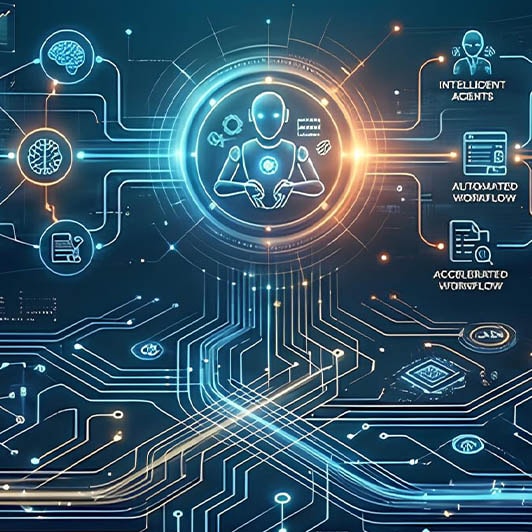
Autonomous AI agents are now making decisions in your environment. They're processing data, executing workflows, and taking actions without human intervention. Traditional logging and monitoring frameworks simply can't track what's happening. You can't see the reasoning behind decisions. You can't prove the agent acted appropriately. You can't demonstrate control.
This creates a governance vacuum. And into that vacuum flows risk.
"Shadow AI", unapproved tools and functions that evade conventional security controls, poses real dangers: data exfiltration, accelerated coding flaws, unauthorised access. But even approved AI systems create accountability challenges.
When an AI agent makes a decision that affects customer data or critical infrastructure, who's responsible? How do you investigate? How do you prove to a regulator that you maintained control?
The answer is observability. Complete, real-time visibility into every action an AI system takes. Not just logs, but traceable evidence of reasoning, decision-making, and outcomes. This is the difference between confidence (which evaporates during crises) and assurance (which is built on factual, repeatable evidence).
Organisations that embed observability into their AI governance now will be the ones that sleep soundly when regulators come calling, or when an incident occurs.
Pillar 3: Resilience under pressure
Control is meaningless if it collapses when you need it most.
This is where the gap between planning and tested capability becomes painfully obvious. Many organisations have incident response plans gathering dust. They've never actually rehearsed recovery. They don't know who owns what during a crisis. They haven't identified which services are truly critical and which can tolerate disruption.
When a cyber incident hits, and it will, control evaporates without clear ownership, escalation protocols, and practical recovery testing. Cloud providers go down. Supply chains fracture. Decisions get delayed.
The organisation that survives isn't the one with the best plan; it's the one that has rehearsed relentlessly.
Resilience under pressure means treating incident response as a core operational capability, not a compliance checkbox. It means collaboration across teams, clear escalation paths, and the discipline to test recovery scenarios until they become muscle memory.
Why this matters now
Three converging forces make this moment critical:
Regulatory tightening. SOCI reforms, APRA CPS 230/234 obligations, Privacy Act amendments, and changes to government expectations on FOCI reporting are all pushing in the same direction: organisations must demonstrate provable control. Evidence-based reporting isn't optional anymore. It's the price of operating in regulated industries.
AI acceleration. Autonomous agents are moving from pilot projects to production systems. The organisations that figure out how to govern and observe AI safely will gain competitive advantage. Those that don't will face escalating risk and regulatory scrutiny.
Hybrid complexity. Your workforce is now human and artificial. Your infrastructure spans multiple cloud providers and on-premises systems. Your supply chain is global but your accountability is local. This complexity is permanent. Learning to navigate it is essential.
The NCS difference
At NCS, sovereignty isn't something we bolt onto our service delivery. It's woven into how we operate.
We're Australian. We've been here for 47 years. We understand the regulatory landscape because we live in it. We know what "local control" actually means; not as a compliance concept, but as a practical operational reality.
Our support teams are based here. Our decision-making happens here. Our accountability is to Australian regulators and Australian customers.
It's a deliberate choice that shapes everything we do.
When we talk about observability, we're not selling you a tool. We're sharing hard-won experience from securing critical infrastructure across multiple sectors.
When we discuss resilience, we're drawing on years of incident response and recovery operations. When we emphasise local control, we're reflecting the reality of how we've built our own operations.
We're different because we've chosen to be local, driven by the needs of Australian regulated industries, and deliberately focused on the kind of sovereignty that actually works in practice.
What comes next
Redefining sovereignty isn't a one-time project. It's a continuous discipline. It requires:
- Complete visibility into your cloud assets, identities, data flows, and AI agent activities
- Evidence-based controls aligned with SOCI, Essential Eight, ISM, and other frameworks
- Practical resilience tested through regular incident response rehearsals
- Unified governance that converges multiple regulatory obligations into a coherent operating model
This is complex work. But it's also the work that separates organisations that genuinely control their risk from those that are simply hoping regulators don't look too closely.
Let's start the conversation
If your organisation operates in a regulated industry, critical infrastructure, financial services, healthcare, telecommunications, you're already feeling the pressure. Regulators are asking harder questions. Boards are demanding better assurance. Threat actors are moving faster.
The question isn't whether you need to rethink sovereignty. The question is whether you're ready to move from compliance theatre to provable control.
We'd like to help you find out.
NCS is offering a Cybersecurity Posture and Visibility Workshop, a focused, high-level assessment of your current security posture and control environment. We'll work with your team to:
- Enumerate your complete cloud asset inventory across AWS, Azure, and other platforms
- Identify exposure, misconfigurations, and compliance gaps
- Map your current controls against SOCI, Essential Eight, and ISM standards
- Develop a prioritised remediation roadmap with realistic effort estimates
This is a genuine discovery engagement designed to give you clarity about where you stand and what comes next.