
There’s a moment in a technology wave when it feels like everyone’s either breathless with excitement or bracing for collapse. When it comes to generative AI, we’re deep in that moment right now. Wild claims, inflated demos, and viral LinkedIn posts, and YouTube videos fill our feeds. And while some of that excitement is warranted, a lot of it is driven by, let’s be honest, commercial interests.
But here’s the thing: just because some people are overhyping the technology doesn’t mean it isn’t real, or powerful.
In fact, one of the hardest positions to hold right now, but also the most important, is to say:
Yes, there is hype around the technology, some of it overhyped.
Yes, it’s also improving faster than anything we’ve seen.
And yes, it’s already useful, when used responsibly.
Let me show you what I mean.
From idea over dinner to working prototype overnight
It started with a conversation over dinner. A client shared an idea. A real one. An idea for a mobile app that could help people in a meaningful way. I won’t go into the details here (the idea isn’t mine to share), but it was a simple, practical concept with real-world value.
I told them I’d get some designers to mock up what it could look like, something visual to move the conversation from talk to tangible.
But when I got back to my hotel, I did something else.
I took the brief I was going to send to my team, adapted it slightly for clarity and structure, and fed it to an AI coding agent. I asked it to scaffold the application, basic screens, flow, layout, unit testing, CI/CD pipeline. Just enough to give the idea shape.
Within a couple of hours, I had something running on my phone.
A demo. A prototype. A conversation starter.
And I showed it to the client the very next day.
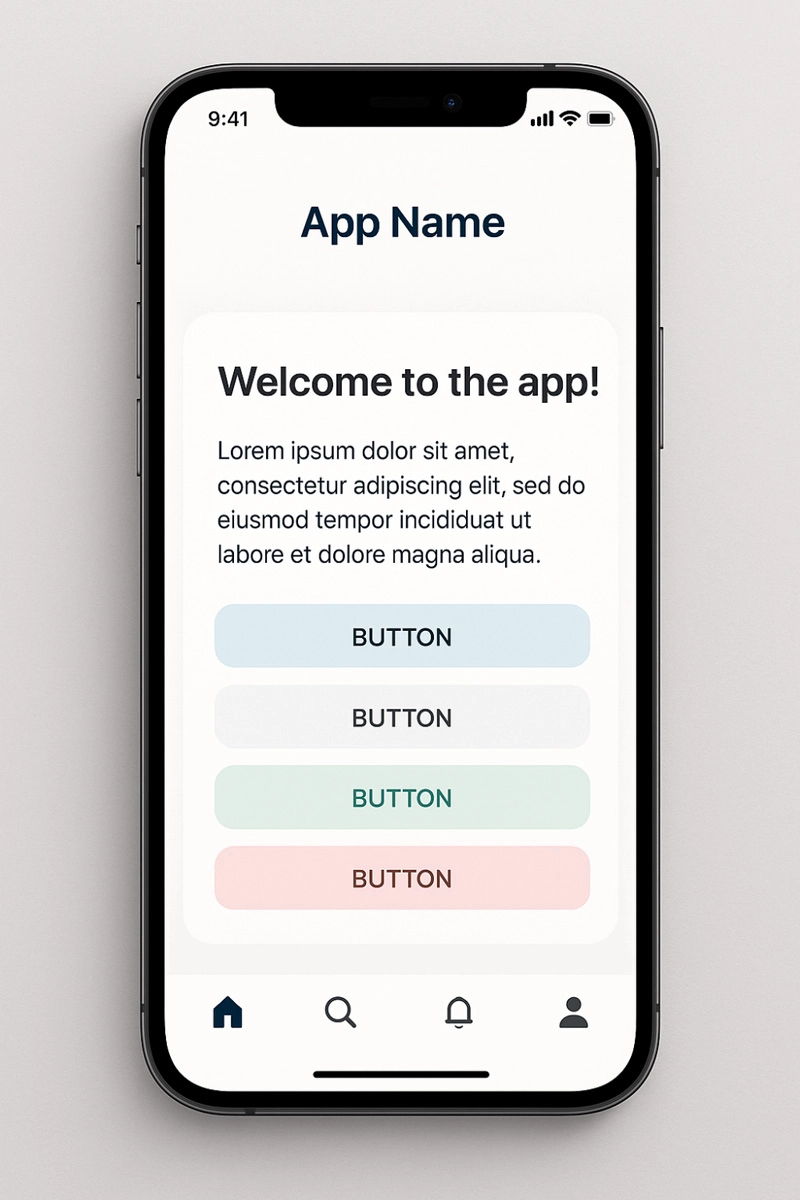
Generic mobile app mockup screenshot running on phone
Teaching through building: A demo that clicks
That demo became a tool.
I hosted the code on GitHub and connected it to OpenAI’s Codex, an agentic coding platform that can take natural language instructions and generate or modify software accordingly. Then, I started showing people. Anyone curious but mostly C-level executives, attending an AI-themed conference in Singapore.
Each time someone had a new idea, “what if it also did X?”, I’d fire up a new agent session, give it the prompt, review the pull request it generated, and either approve it or send it back with suggestions. Over two days, I must have done 25 or 30 iterations.
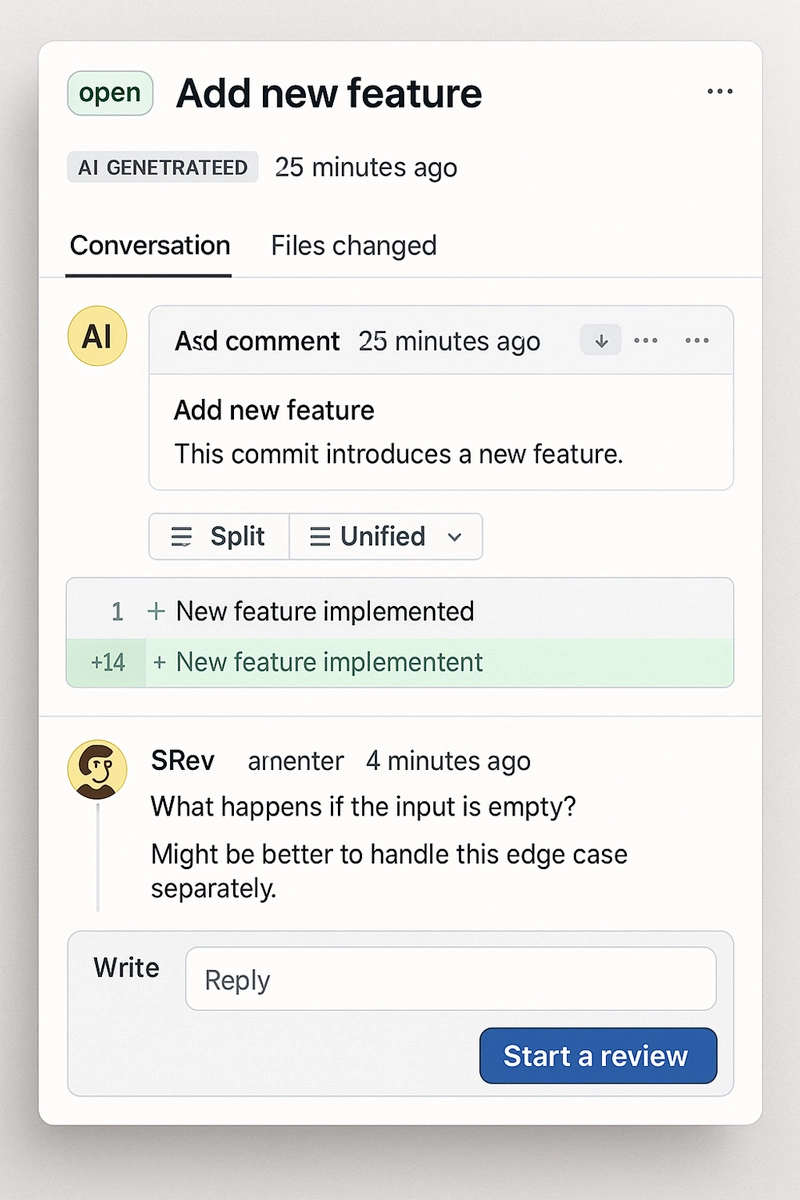
GitHub pull request create by AI with human-in-the-loop reviewer comments
People were blown away. Not just by what it could do, but by how interactive and iterative it was. This wasn’t “set it and forget it.” This was co-creation.
And it changed the way they thought about what coding, and software creation, could be.
Degrees of automation and the unavoidable question of accountability
Now, I want to make a sharp turn here. Because everything I’ve said so far could be misunderstood. It could be seen as a story about how AI can now replace developers. Or how the future is just agents building apps for us.
That’s not the point.
The point is this: as we introduce automation into our processes, we cannot outsource accountability.
Let me explain with a slightly absurd example, one that seems to resonate well with people.
Let’s cross a bridge?
I recently “vibe engineered” a footbridge between Newstead and Bulimba, two suburbs in Brisbane, separated only by the river. If you’ve ever been there, you’ll know how close they are, you can almost touch the other side. But unless you have a boat, getting across is a hassle.
So, I asked some LLMs to help. I prompted, iterated, and refined. And in the end, I had a beautifully written project plan for a footbridge, complete with materials, cost breakdowns, environmental assessments, and engineering specs.
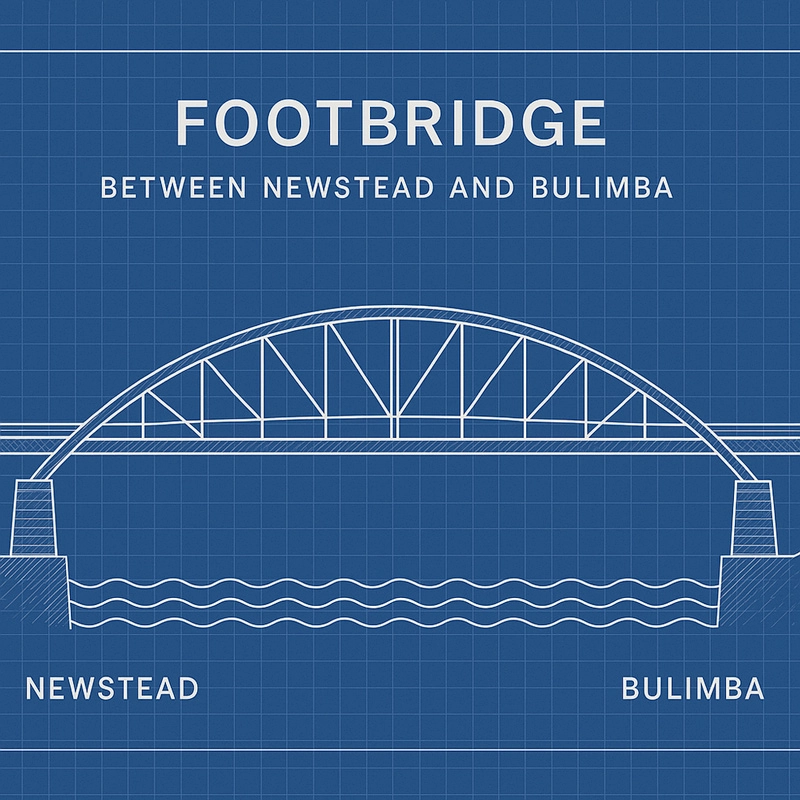
AI-generated bridge blueprint concept
Now, obviously I’m not a civil engineer. I wouldn’t dare try to build that bridge. And I certainly wouldn’t trust one built exactly to those specs without expert review. No sane person would.
The reason is obvious: lives are at stake.
But here’s the twist: we are already building digital “bridges” with AI, systems that govern money, healthcare, education, public policy, are accountability and oversight well understood and implemented in those cases?
If an agent writes a data processing pipeline that mishandles patient information, the consequences might be less visible than a collapsed bridge, but they are no less real.
That’s why accountability can’t be handed off. It stays with the humans. With us.
The real power of AI in business
So, what’s the lesson?
AI-assisted coding is a striking example, but it’s just one of many. Any business process that involves language, judgment, and the production of new work, from contracts to customer service, from policy writing to pricing strategies to coding, is now within the reach of varying degrees of automation.
But capability isn’t the same as trust. Or quality. Or impact.
The difference between hype and value is accountable use:
- Use AI to move faster, prototype quicker, explore broader.
- But always apply judgment, context, and care.
- And always sign your own work, AI-assisted or not.
Because in the end, whether it’s a mobile app or a footbridge, the human is still the one who owns the outcome.
Human hand shaking a robot hand over a drawing board
AI is not the builder. It’s the tool.
We are still the architects. At least for now.